

A walk-in cooler and a walk-in freezer can look almost identical from the outside — same insulated box, same heavy door, same hum. Inside, they do completely different jobs, are built differently, and fail in different ways.
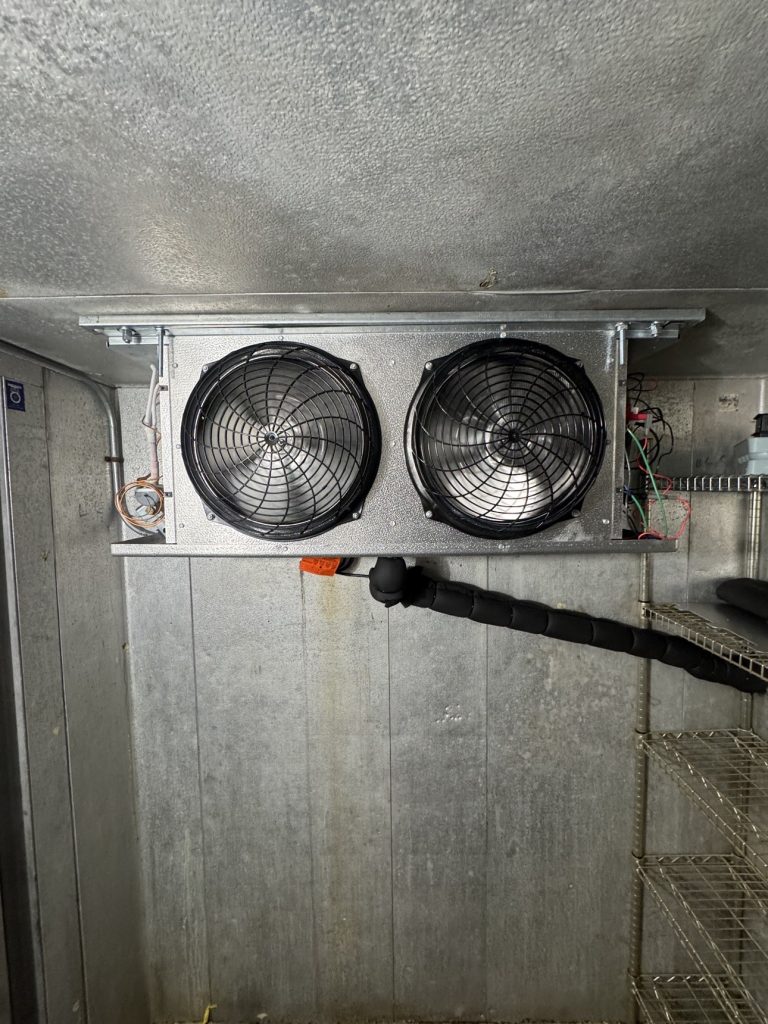
Mixing them up leads to spoiled product, wrong equipment purchases, and repairs that don’t fix the real problem. This guide breaks down the real differences for Naples and Southwest Florida restaurants, bars, grocery stores, convenience stores and food distributors.
The Big Difference: Temperature
Cooler: A walk-in cooler holds about 34 to 41 degrees Fahrenheit. That range is used to keep fresh food cold for perishable food safety — cold, but not frozen.
Freezer: A walk-in freezer holds 0 degrees Fahrenheit or below. Food in a freezer must stay frozen solid.
A few degrees of drift matters in both. In a cooler, drift pushes food out of the safe cold-holding zone. In a freezer, drift means soft product, thawing and refreezing, and lost quality.
What Each One Is Built to Store
Store in a cooler:
- Fresh produce
- Dairy
- Meats before cooking
- Prepared foods
- Drinks
- Flowers and other products that need cold but not frozen
Store in a freezer:
- Frozen meats and seafood
- Ice cream
- Frozen prepared foods
- Ice
- Long-term storage
Rule of thumb: If it would be ruined by freezing, it belongs in a cooler. If it would spoil without staying frozen solid, it belongs in a freezer.
Why a Freezer Is Not Just a Colder Cooler
A freezer needs things most coolers do not:
- Electric defrost cycles on a timer to clear frost from the evaporator
- Defrost heaters, termination and fan-delay controls
- Door heaters and heated frames
- Drain pan and drain line heaters so condensate does not freeze
- Heated pressure-relief vents so the door can open after closing
- Door gaskets and closures that fight ice buildup
Warm, humid Southwest Florida air entering a freezer turns straight to frost and ice — on coils, floors, ceilings and doors — so ice management is designed in from the start. A cooler mainly fights temperature drift, condensation and door-seal leaks.
Can You Turn a Cooler Into a Freezer (or the Other Way)?
Usually not as a simple thermostat change. The temperature target, insulation and floor needs, defrost design, heaters, venting, refrigerant system sizing and controls all differ.
Running a cooler system at freezer temperatures ices it up and overworks it. Storing fresh food in a freezer ruins it.
If a business is changing how it uses a box, get the box and load assessed and the equipment right-sized first — contact Patriot Cooling for free estimates.
How They Fail Differently
Cooler warning signs:
- Product warmer than usual
- Condensation on packaging
- Constant running
- Ice on the evaporator from a leaking door seal
- Water on the floor
- Temperature log creeping up
Freezer warning signs:
- Soft ice cream or thawing product
- Heavy frost
- Ice on the floor, ceiling or door frame
- Door hard to open or won’t seal
- Failed defrost
- Product with freezer burn
In both, a small cause — a gasket, a heater, a control — can cascade into a bigger failure. Trace the cause. Don’t just clear the ice or top off refrigerant.
Which One Does Your Business Need?
Many kitchens need both: a cooler for daily fresh prep and a freezer for bulk and long-term storage.
Choosing starts with product, door traffic, box size, delivery patterns and how warm the surrounding room gets — not with whatever unit was there before. That is true for any commercial refrigeration decision.
Right-sizing matters. An undersized system runs constantly and still warms on a busy day. An oversized system short-cycles and struggles with humidity.
Maintenance Is Different, Too
Cooler maintenance includes:
- Coil cleaning
- Refrigerant checks
- Control calibration
- Door seal and drain checks
Freezer maintenance adds:
- Defrost cycle verification
- Heater amperage checks
- Drain and vent heater checks
Both benefit from a reliable thermometer checked at set times daily, and from temperature monitoring and alarms that catch an overnight failure before inventory is lost.
Patriot Cooling Can Help
Patriot Cooling Inc provides AC repairs, system sales & installations, water heaters, pool heaters, mini splits, walk-in coolers & freezers, and commercial refrigeration. We are family-owned in Naples, FL, with 24/7 service, free estimates, financing available, a 100% satisfaction guarantee, and we are licensed & insured — FL License CAC1821399.
Call (239) 202-6831 for same-day service