

If you live in Southwest Florida, your outdoor condenser never really gets a break. It sits outside 24 hours a day, seven days a week, in warm Gulf air. Salt spray and salty moisture do not stop at the beach, either. They travel inland on the breeze well beyond the shoreline, settle on everything left outdoors, and — combined with our humidity and year-round air conditioning runtime — quietly corrode the condenser coil. In many homes, that outdoor coil wears out years before the indoor half of the system does.
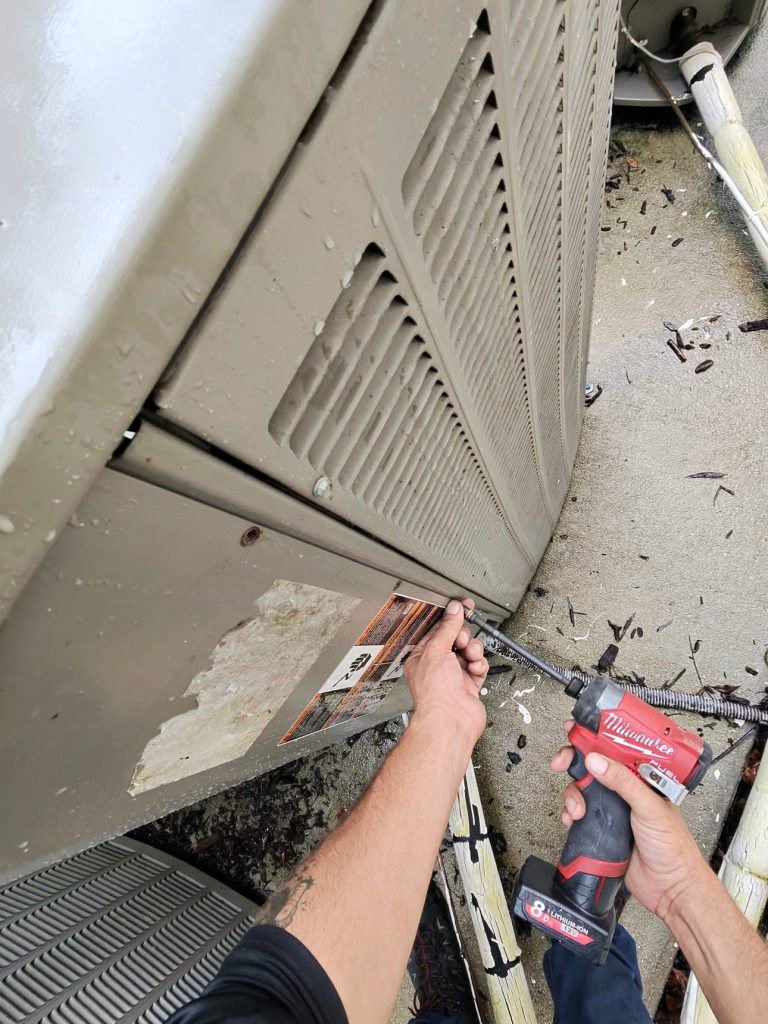
What Salt Actually Does to a Condenser Coil
Your condenser coil is made of thin aluminum fins wrapped around copper tubing, and that design is great for moving heat — but not for resisting salt. When salt lands on the coil and mixes with moisture, it accelerates corrosion on both metals. The thin fins go first. They start to crumble, flake, and turn powdery, and as they break down, the coil cannot transfer heat as well, so your system works harder to cool the same house.
Given enough time, corrosion can eat through the copper tubing itself and cause refrigerant leaks. Contact between dissimilar metals in the coil can speed the whole process up.
Why Southwest Florida Is Especially Hard on Outdoor Units
A lot of places have salt air. Southwest Florida adds humidity, storms, and runtime on top of it. High humidity keeps coils damp for long stretches, giving salt more time to work. Storms and strong onshore winds drive salt inland, sometimes far from the coast. And because our systems run most of the year, there is very little dry downtime when a coil can simply sit and dry out.
Homes on or near the water — in Naples, Marco Island, Sanibel, Captiva, Fort Myers Beach, and Cape Coral — usually see corrosion fastest. But inland Naples homes are not immune.
Signs Salt Corrosion Is Winning
You do not need special tools to spot early trouble. Walk out to the condenser, look closely at the coil behind the grille, and watch for:
- White or greenish corrosion building up on the fins
- Fins that flake, crumble, or feel powdery to the touch
- Rust on the cabinet, screws, and fasteners
- Rising electric bills without a clear change in how you use the system
- A system that runs longer and cools less than it used to
- Refrigerant leaks at the outdoor coil
- Repeated repairs on an outdoor unit that, frankly, looks rough
One sign by itself does not always mean the coil is finished, but a cluster of them — especially fin loss plus higher bills — is worth having checked promptly.
What Homeowners Can Do
The best homeowner habit is simple: rinse the salt off. With the system turned off, gently rinse the outdoor coil with a regular garden hose at low pressure. If you can safely reach the inside of the unit, rinse from the inside out to push debris outward; otherwise, a careful rinse of the exterior coil surfaces still helps wash away salt and dirt.
Never use a pressure washer. The blast that looks like deep cleaning is actually bending those thin fins flat, and bent fins block airflow and make heat transfer worse. Also keep plants, mulch, and debris cleared away from around the unit so air can move freely, and keep up with indoor filter changes so the whole system is not straining.
Finally, schedule regular professional maintenance and coil cleaning. A rinse handles surface salt, but a pro cleaning and inspection can catch corrosion, leaks, and electrical wear a rinse cannot.
What Does NOT Fix It
When a coil looks dirty or corroded, a few common fixes tend to make things worse:
- Pressure washing the coil — it flattens fins and hurts airflow
- Spraying harsh household chemicals on the coil, which can damage the metals and fins
- Ignoring early fin loss because the system still seems to cool
- Topping off refrigerant without finding the corrosion leak that let it out
If refrigerant is low, the important question is why. Adding more without finding and addressing a leak just buys a short reprieve while the corrosion keeps working.
Repair or Replace?
This is where honest math matters. On an older system, a corroded coil that is already leaking often tips the decision toward replacement, especially if you have already paid for repeated repairs on the same outdoor unit. Learn more about air conditioning replacement / installation — at Patriot Cooling, installations start from $7,000, and estimates are free.
A younger system is a different conversation. It may be worth a coil evaluation first before anyone talks about replacement. If you are seeing signs of trouble, our AC repair team can inspect the coil and explain what we find — our service call is $90 — so you can decide based on the condition of your actual unit, not a guess.
Planning a Coastal Installation
If you are installing a new system near the coast, a few day-one decisions can add years to the outdoor unit’s life. Where the layout allows, place the condenser away from direct salt spray and away from sprinklers — especially reclaimed-water sprinklers that would hit it regularly. Leave good clearance for airflow, make sure water drains away instead of pooling at the base, and start a simple rinsing and maintenance plan from the beginning. Talk through all of this at estimate time.
The Bottom Line
Salt air damage is slow, and much of it is preventable. Rinse the coil gently, keep up with maintenance, and take early corrosion seriously before it becomes a refrigerant leak and a replacement decision during the hottest week of the year.
Our services include AC repairs, system sales and installations, water heaters, pool heaters, mini splits, walk-in coolers & freezers, and commercial refrigeration.
If your outdoor unit is showing white, flaky fins, rising bills, or weak cooling, do not wait for it to quit. Contact Patriot Cooling today. Call (239) 202-6831 for same-day service.
FL License CAC1821399